

Black Friday is next week, and the holiday shopping season is underway. The National Retail Federation forecasts holiday sales of $1.013 trillion in November and December, 4.2% more than last year. That adds up to a lot of quick decisions, in stores and online .
Before shoppers make any of those decisions, retailers make one of their own: what products to sell in their store. A store’s assortment sets the options its shoppers have available to choose from. For shoppers who consider the environment when they buy, that raises a few questions. How much does a store’s sourcing matter to them? Do they want retailers to make sustainability part of what they stock? And do they see retailers doing it?
Eco-conscious shoppers expect sustainability to shape what retailers put on their shelves.
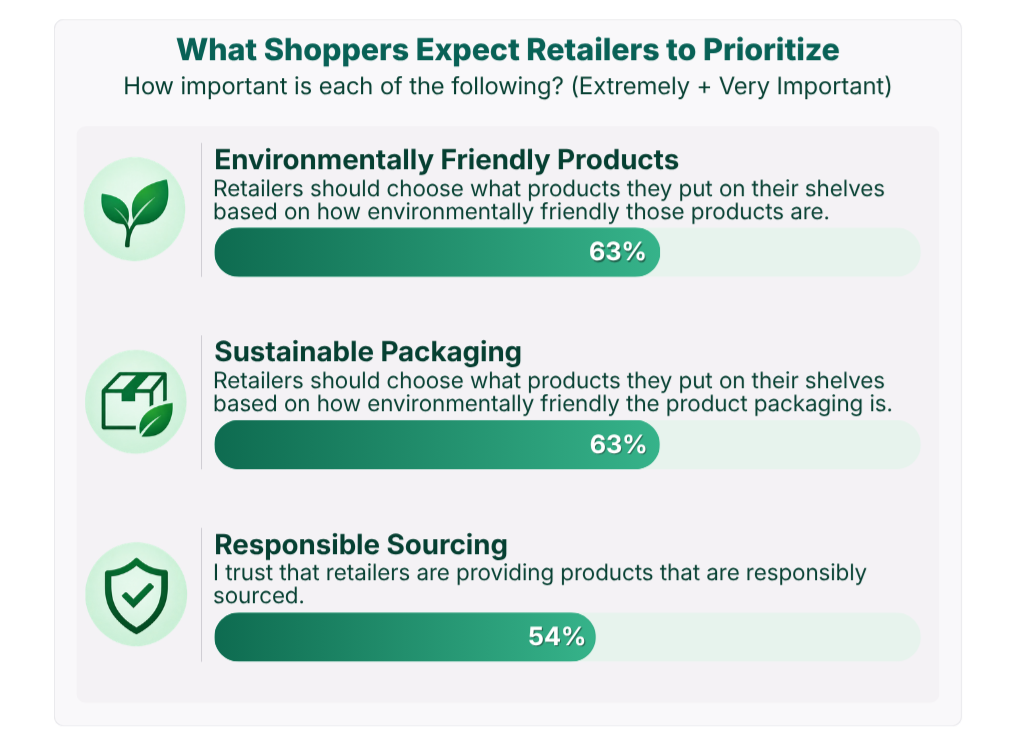
Most Americans (84%) say environmental reasons play a role in their product choices at least some of the time. For these eco-conscious shoppers, sustainability expectations extend beyond individual products to the stores that sell them. They want retailers to consider responsible sourcing and the environmental impact of products and packaging when deciding what to stock. For many, those standards also matter when deciding where to shop.
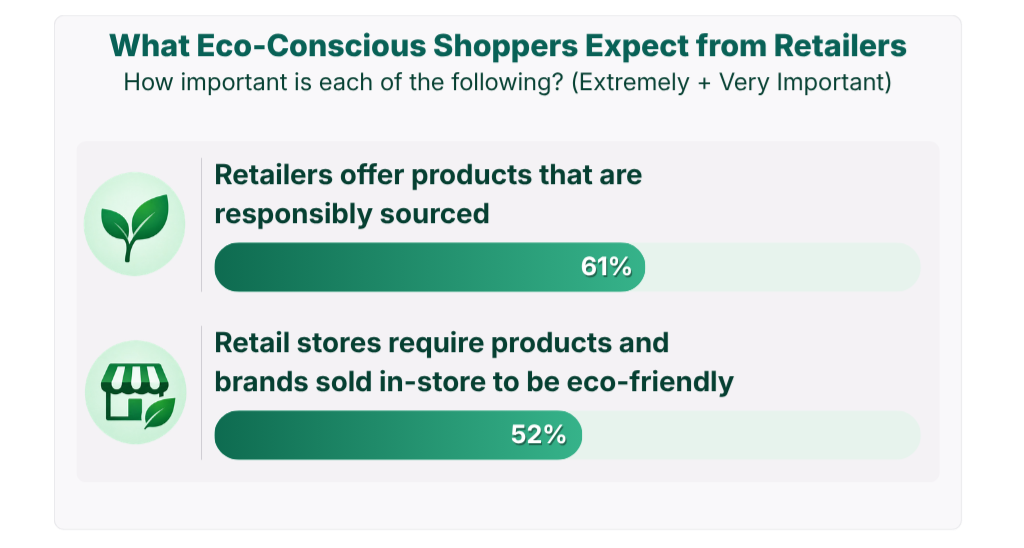
Eco-conscious shoppers expect responsible sourcing, but only about half trust retailers to deliver it.
There is room for improvement: Only about half (54%) trust that retailers are providing responsibly sourced products. This gap between shoppers’ expectations and their trust in retailers suggests that retailers need to do more. Closing the gap may depend as much on what retailers communicate as on what they stock.
Over the next six weeks, retailers will compete for shoppers who are making many decisions quickly. Part of the decision happens before they reach the shelf, when they pick a store. For many eco-conscious shoppers, a store’s standards factor into where they shop, and each store that makes the cut has a chance to capture more of their holiday spending.
What's the Takeaway?
Retailers, in brick and mortar stores and online, may find that the stakes of their assortment decisions reach well beyond the eco-friendly options. A retailer whose product mix falls short of what many eco-conscious shoppers expect may be passed over entirely, losing not just the sustainable purchase but the rest of the shopping basket or cart as well. Choosing what to carry with sustainability in mind is one step. Communicating those choices so shoppers notice them (in store or online) is the other, especially with about half of these shoppers trusting retailers’ sourcing today.