
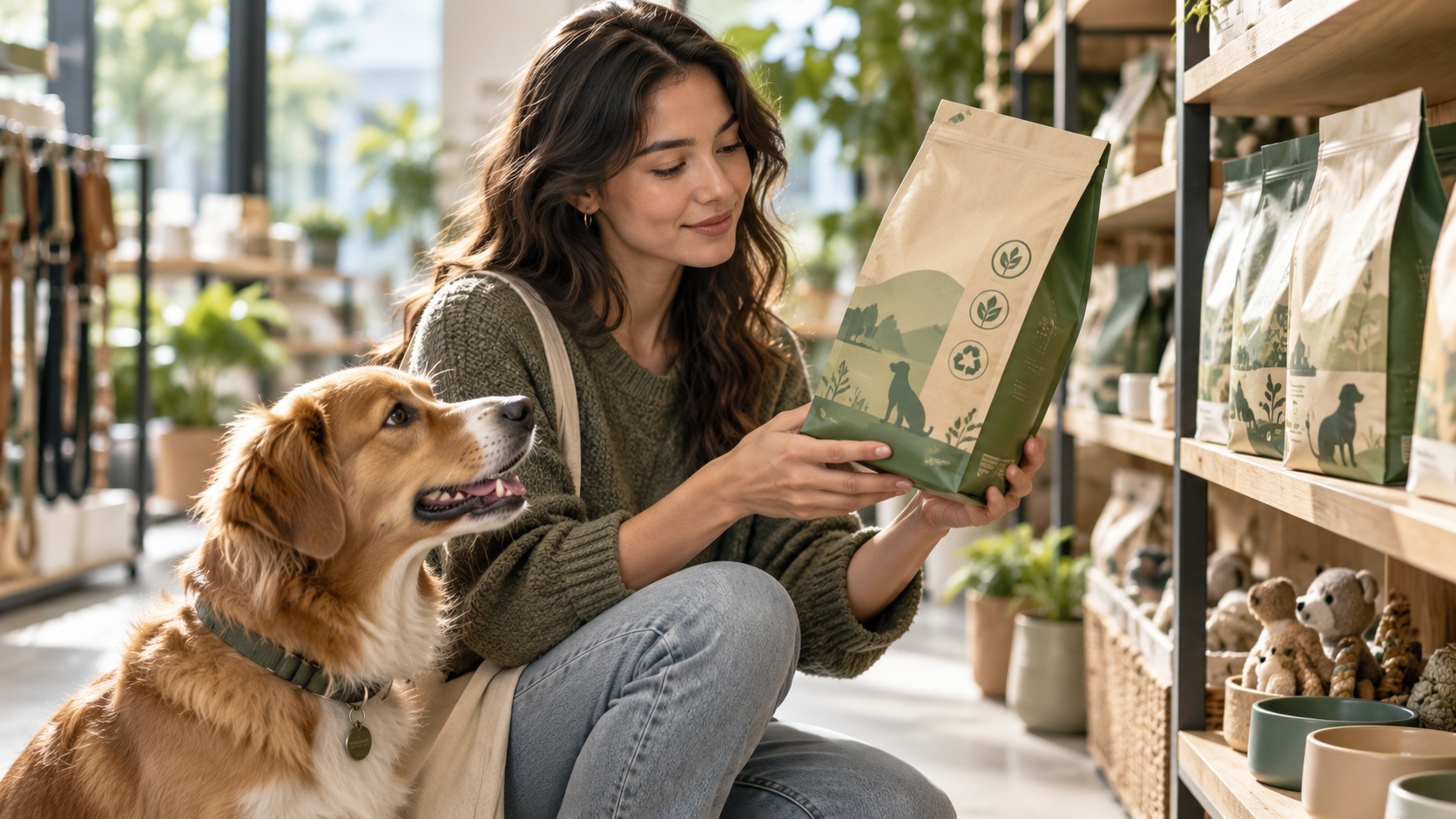
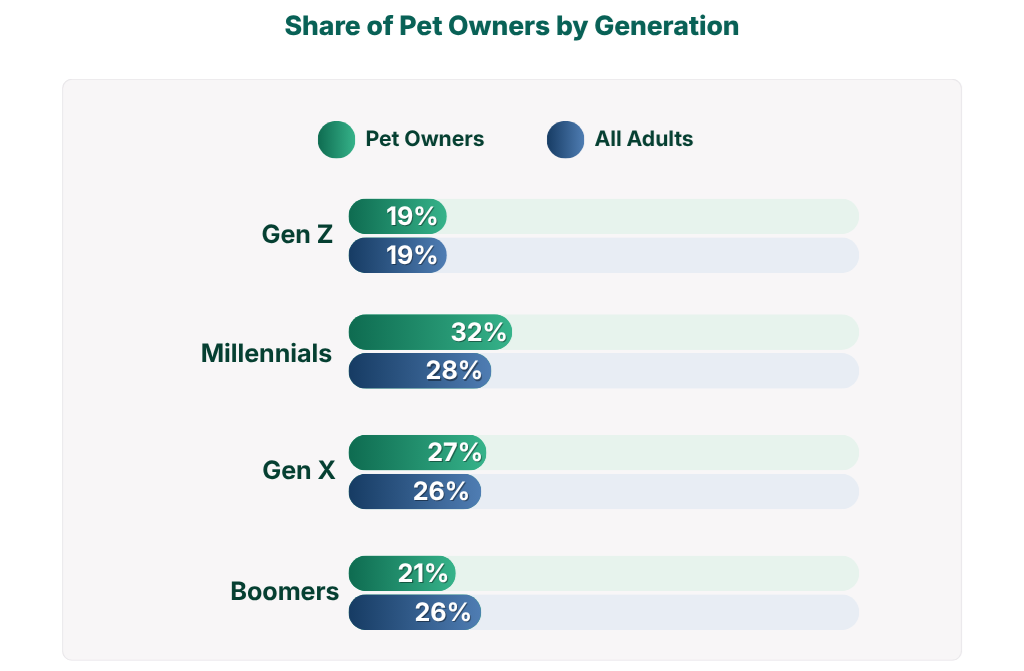
Sustainability has made its way into the pet aisle, from recyclable packaging to responsibly sourced ingredients. The owners shopping that aisle are getting younger. Adults under 45 now make up about half of all pet owners. Millennials are the largest single generation of pet owners, and Gen Z's share is growing as more of the generation reaches adulthood ( American Pet Products Association, via Pet Food Industry ). That raises two questions: How much do these younger owners trust what brands tell them about sustainability? And what would it take to earn more of that trust?
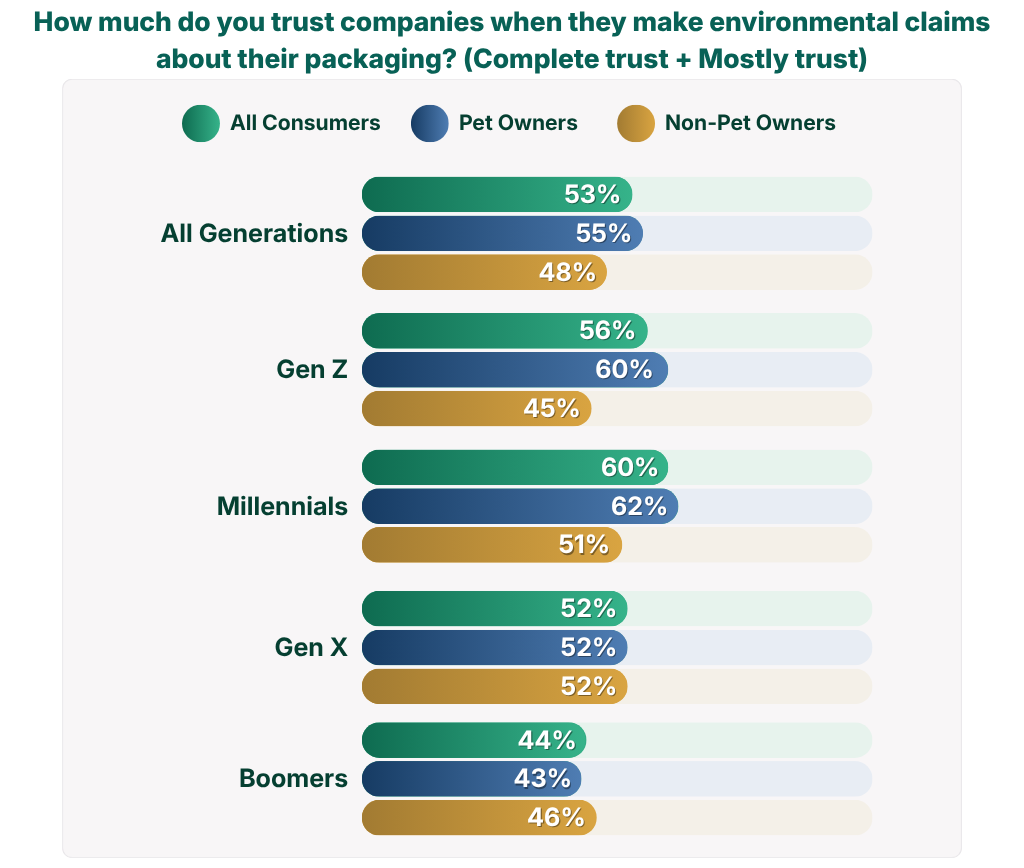
Six in ten younger pet owners trust companies' environmental claims, compared with about half of consumers overall.
About half of consumers (53%) trust companies’ environmental claims about packaging. Among pet owners that trust is similar (55%) but is noticeably higher among Millennial pet owners (62%) and Gen Z (60%). Yet this higher trust isn’t explained by age alone. Young consumers who don’t have pets are less trusting of environmental claims about packaging.
That trust comes with expectations. Millennial pet owners have a clearer sense than Millennials without pets of what would make an environmental claim more believable. They're more likely to look for specific impact data, independent testing results, and certification logos, and to value what other customers have to say. In other words, Millennial pet owners are more willing to believe environmental claims, and more point to a variety of evidence to strengthen those claims.
Millennial pet owners know what would make an environmental claim more believable.
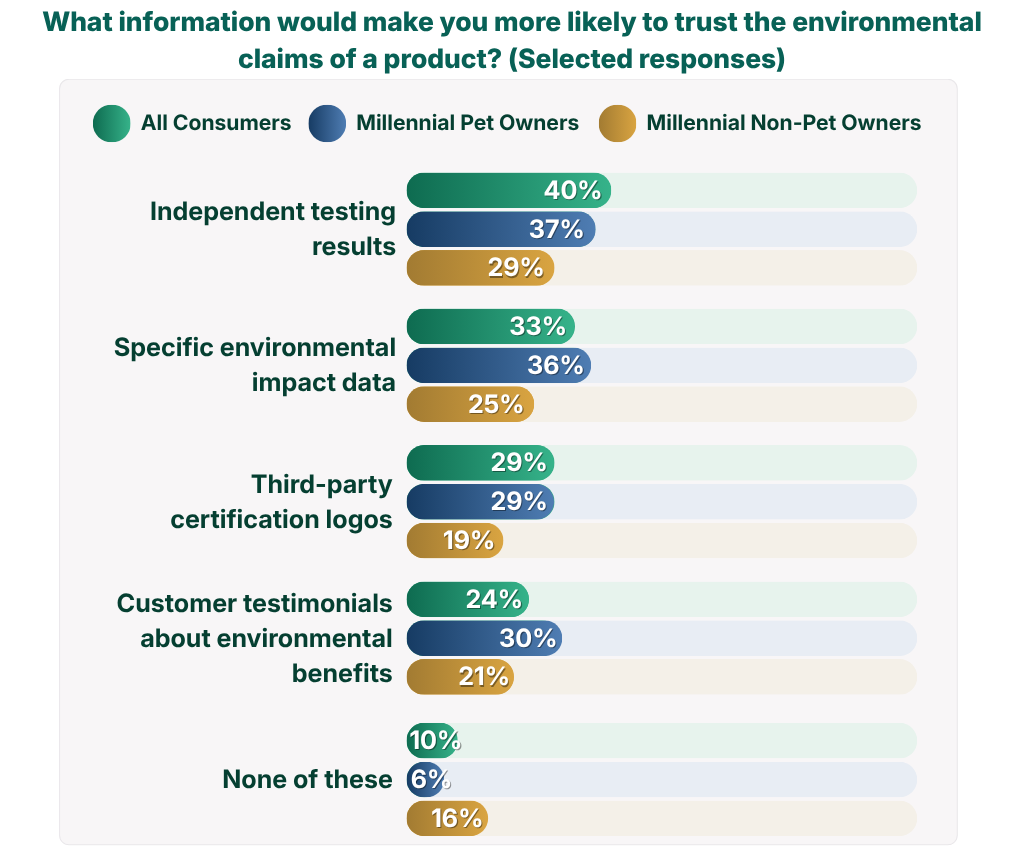
For pet brands, younger owners offer an audience that is both receptive and attentive. Millennial owners in particular look for claims they can check, which favors brands with measurable progress to show.
What's the Takeaway?
Younger pet owners, and Millennials in particular, are more willing than most consumers to trust environmental claims, and Millennial owners are clear about the evidence that would strengthen that trust. That combination may work in a brand’s favor. A pet brand that uses sustainability and more sustainable packaging to differentiate itself and grow market share may be well positioned to reach a large and growing part of the pet market. Millennial owners say specific impact data and independent testing would make them more likely to trust a claim, so positioning backed by that kind of evidence may resonate most with them.