
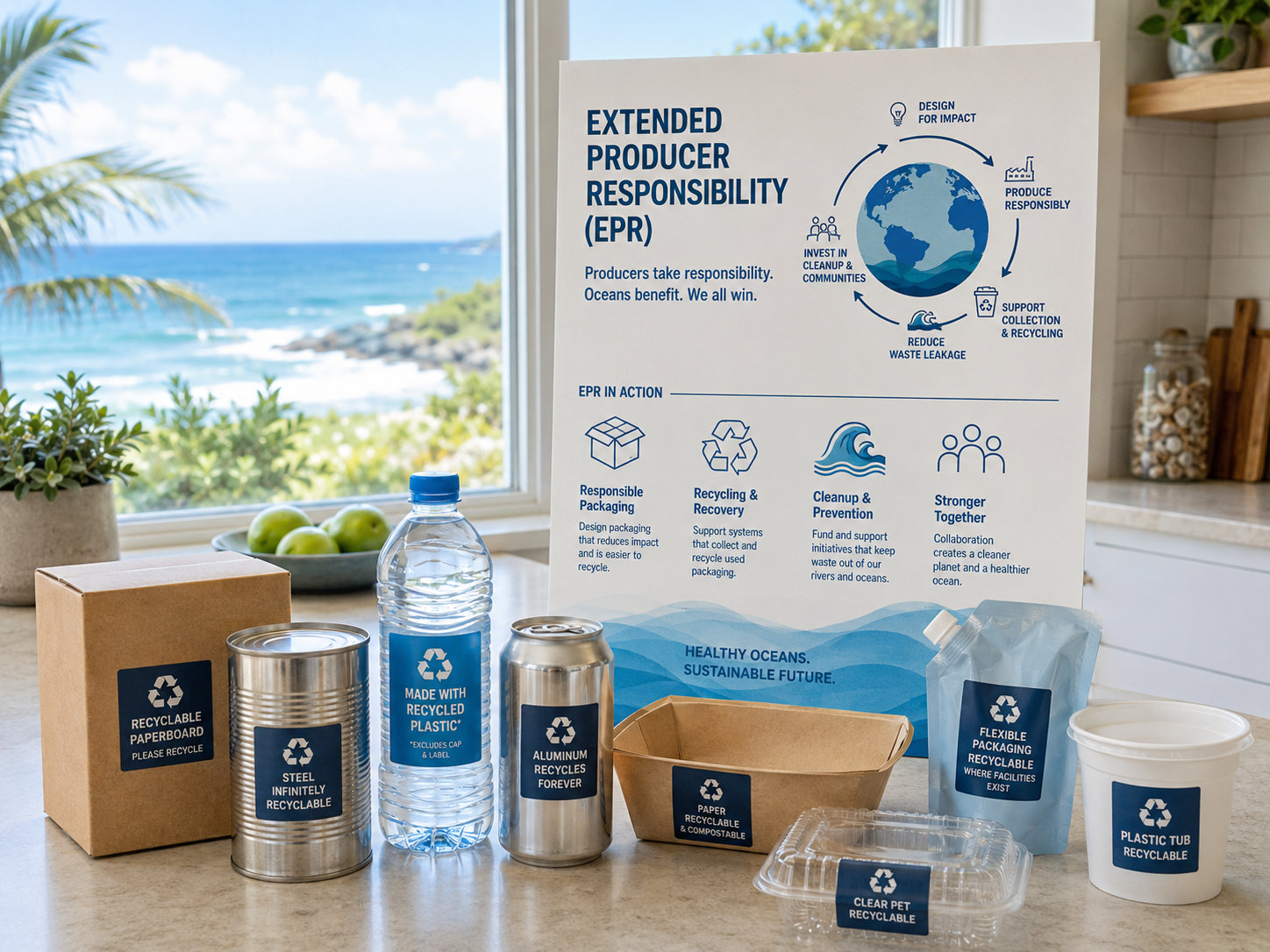
Every June, World Oceans Day draws attention to the health of our oceans and the urgent need to reduce the plastic waste that threatens marine ecosystems. Extended Producer Responsibility (EPR) is advancing across the U.S. as a policy tool to address plastic pollution at its source.
EPR regulations make manufacturers and brands responsible for the full lifecycle of their packaging — including what happens after consumers are finished with it. Companies that produce packaged goods pay fees based on the amount and type of packaging they use, with those fees funding recycling infrastructure and environmental cleanup. The policy is already in effect in several states and is advancing in more.
Two thirds of Americans have never heard of EPR. Two thirds support it once they have.
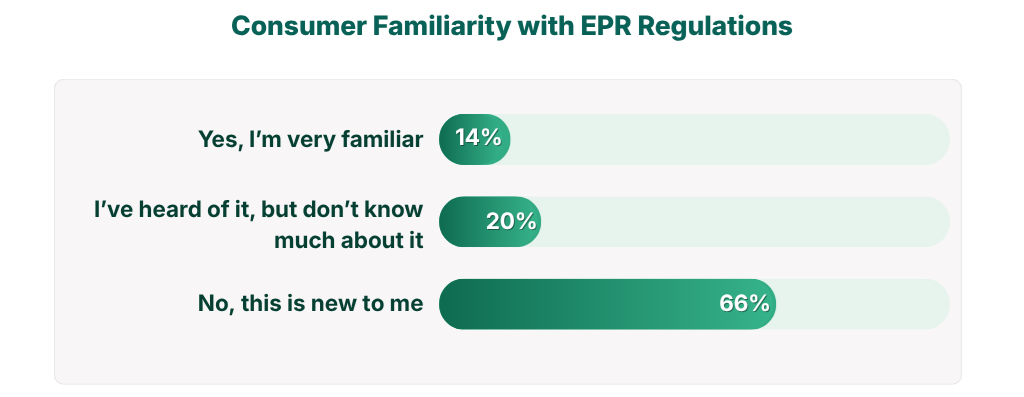
EPR hasn't yet broken through into mainstream public conversation. Two thirds of Americans (66%) say it is completely new to them, and only 14% describe themselves as very familiar with it. That gap between regulatory momentum and public awareness is worth paying attention to.
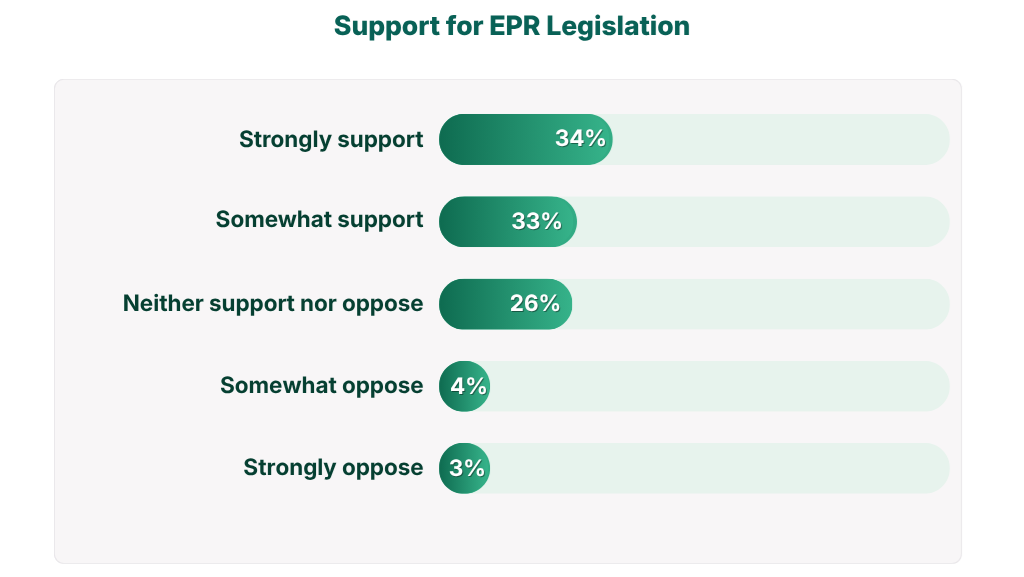
When consumers are given a plain-language explanation of what EPR actually does — companies pay fees based on their packaging footprint, those fees fund recycling and cleanup — support is high. Two thirds of Americans (67%) say they would support EPR legislation in their state, and only 7% oppose it. About 1 in 4 is neutral rather than skeptical: 26% neither support nor oppose.
That combination — low awareness, high support once informed — suggests that as EPR becomes more visible in public discourse, consumer backing is likely to grow with it. Brands that are seen as ahead of the policy will be better positioned than those seen as resisting it.
One in five consumers say they would actively avoid a brand not complying with packaging regulations — a number too large to ignore.
When it comes to impact in stores, the data adds further weight. More than half of consumers (53%) say they would be less likely to buy from a company not complying with packaging responsibility requirements or environmental regulations — including 21% who say they would actively avoid the brand.
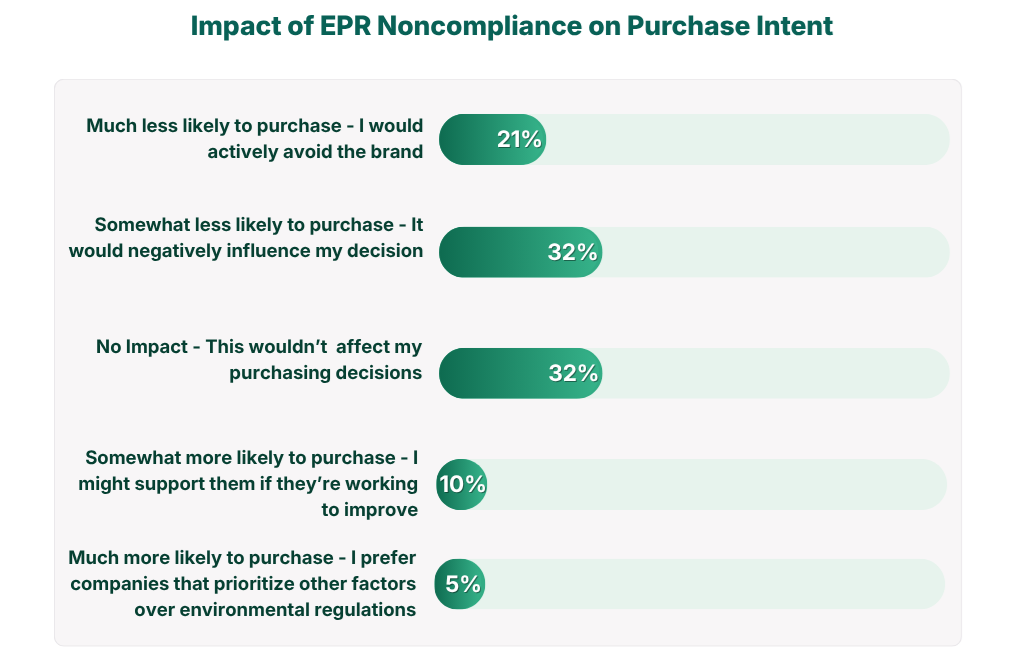
One in three consumers say compliance would not affect their purchasing decisions. Even so, the direction is clear: for a significant share of consumers, how a company handles its packaging responsibilities is becoming part of how they evaluate the brand. For sustainability leaders, the practical implication is straightforward: EPR is moving from regulatory footnote to consumer expectation, even if most consumers don't yet know the term. Companies that invest in packaging responsibility now — and communicate that investment clearly — are building credibility with a public that will increasingly expect it.
What's the Takeaway?
Most consumers don't know what EPR is today. But they support it once it's explained, and they express clear purchasing consequences for non-compliance. Brands that get ahead of this policy shift are better positioned than those that wait for regulatory pressure to act.