
World Rivers Day draws attention to the health of freshwater ecosystems that sustain communities, agriculture, and biodiversity worldwide. The health of rivers and watersheds is a key concern in the US and growing in the face of AI data centers and their high water use, as we reported in our recent article. Click Here to read.
Brands can demonstrate their environmental efforts through certification. But a signal no one recognizes is no signal at all.
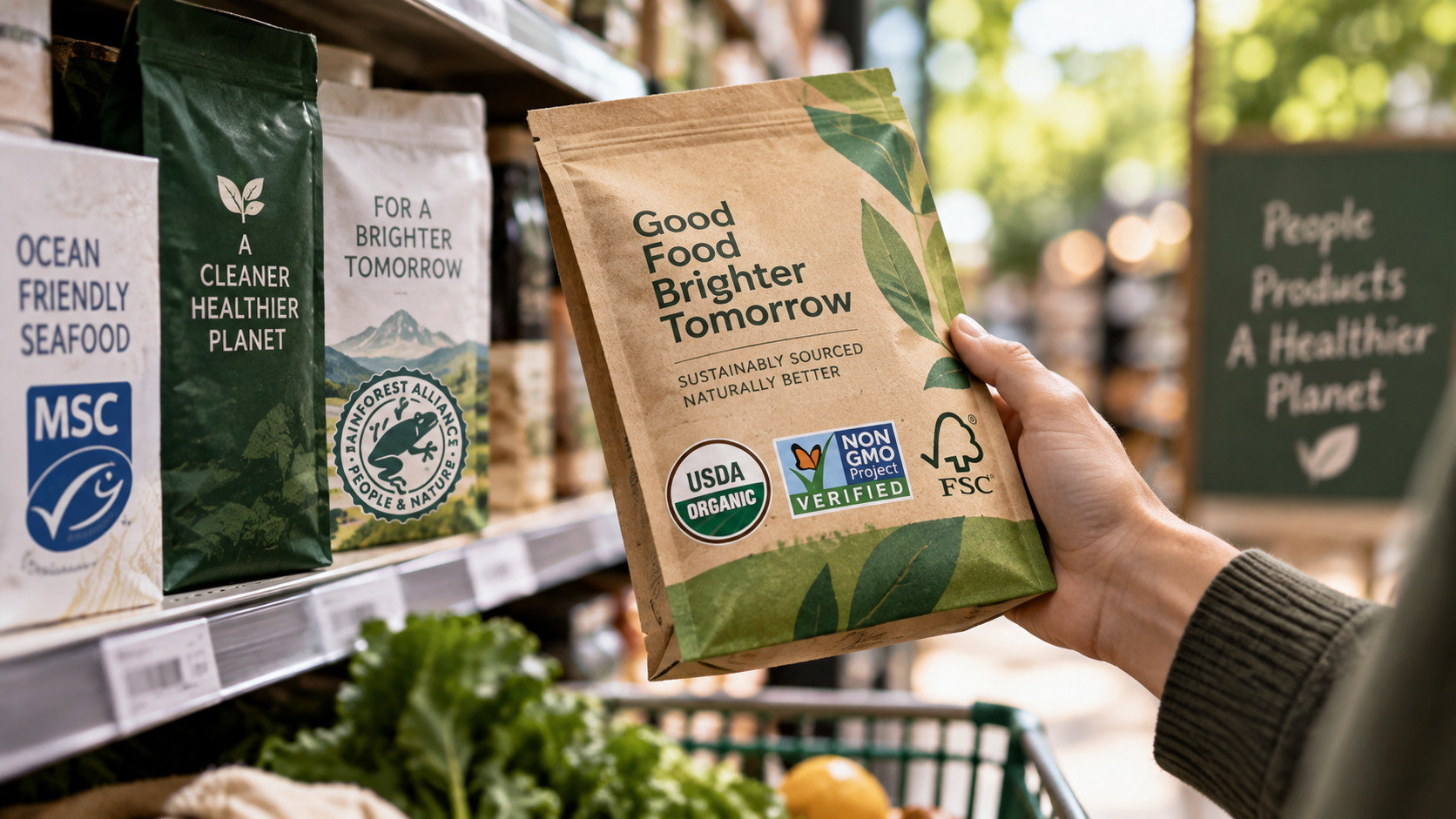
Brands can show their commitment to protecting freshwater ecosystems by getting certified to recognized environmental standards. For example, Rainforest Alliance standards include watershed and water quality protection alongside forest and farming practices. FSC, the Forest Stewardship Council, ensures responsible forest management that protects soil stability, water quality, and watershed health, making it directly relevant to the river systems downstream. These certifications are powerful signals of environmental responsibility.
Certifications can be a powerful tool for communicating your organization's environmental commitments. But how do you decide whether and which certification to pursue? Our data can help provide an answer: the value of any certification depends almost entirely on whether consumers recognize it.
Consumer recognition of certifications varies dramatically. USDA Organic (77%) and NON-GMO Project Verified (69%) lead by a wide margin. Climate Pledge Friendly, launched by Amazon in 2020, has already reached 49% awareness, demonstrating that recognition can be built relatively quickly with the right communication investment behind it. Rainforest Alliance follows at 42%. FSC and Marine Stewardship Council trail at 28% and 24% respectively. Yet among consumers who recognize any of these certifications, influence on purchase decisions is remarkably consistent and notably high, ranging from 87% to 92%.
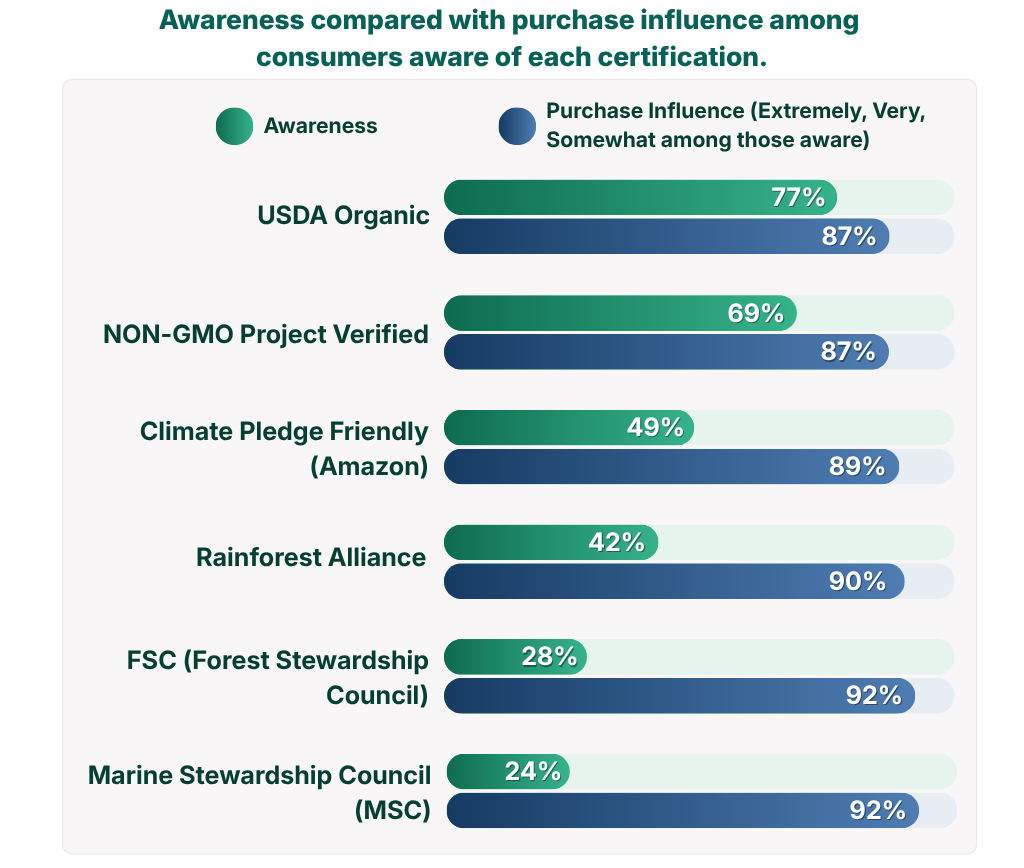
Recognition is the only barrier between a highly influential certification and one that has little effect.
The implication for brands is clear. Carrying a certification is not enough. Consumers need to know what it means before it can do any work. Climate Pledge Friendly's relatively rapid growth in recognition shows what is possible when brands and retailers invest in making a certification visible and understood. Brands carrying Rainforest Alliance or FSC certification that simply display the logo are leaving most of their potential impact unrealized. The brands getting full value from their certification investment are those that actively explain what the certification means, in plain language, on the label, and in marketing, rather than assuming the logo speaks for itself. World Rivers Day is a timely moment to start that conversation.
The certifications protecting rivers, watersheds, and the ecosystems that depend on them are not failing because consumers don't care. They are falling short of their potential because the brands carrying them have not yet made them visible. Recognition is the gap. Communication is the solution.
What's the Takeaway?
Certification investment without consumer education is largely unrealized potential. Rainforest Alliance and the Forest Stewardship Council are all highly influential among consumers who recognize them, but most consumers don't. The brands closing that recognition gap through active communication, plain language explanation, and consistent label and marketing presence are the ones getting full value from certifications that protect the freshwater ecosystems World Rivers Day puts in focus.