

Protecting the variety of life on our planet is as urgent as addressing climate change — and consumers are making that connection too.
For consumers, biodiversity protection is as compelling as net-zero commitments
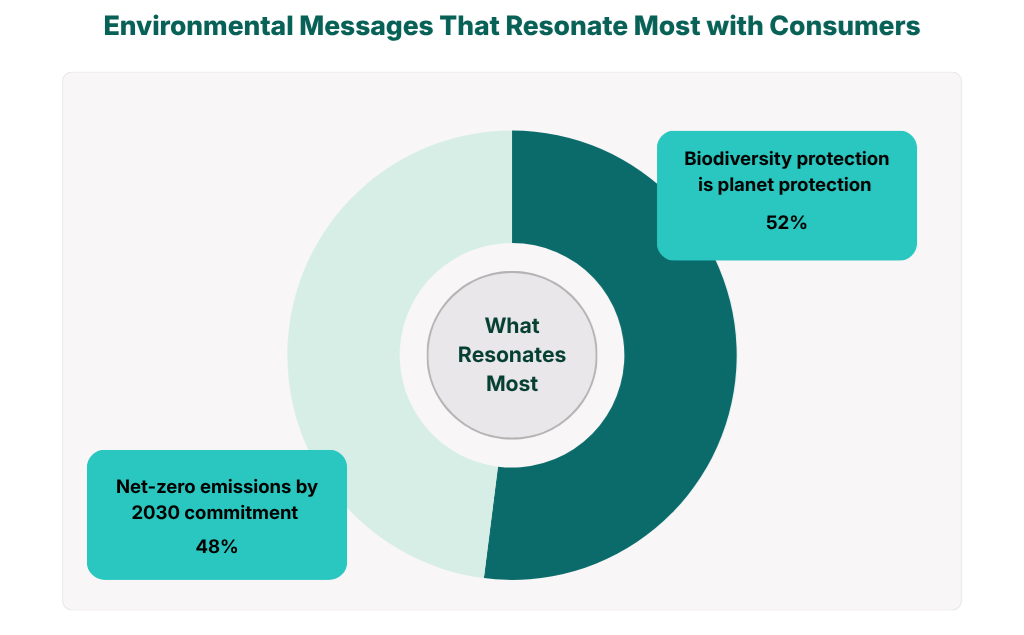
When companies communicate their environmental commitments, biodiversity framing is competitive with the more established language of climate action. Asked which statement feels more positive, 52% of Americans respond more favorably to "biodiversity protection is planet protection" than to "net-zero emissions by 2030" at 48%. The margin is narrow, but the message resonates with mainstream consumers and is no niche concern.
Consumers value biodiversity — but regenerative agriculture still needs more champions
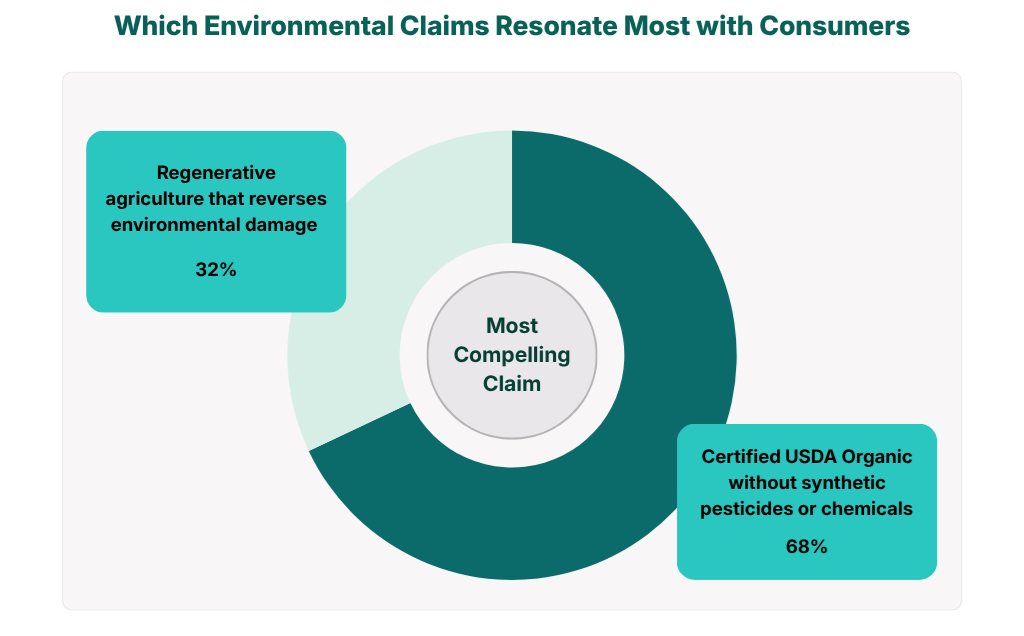
Yet when it comes to the business practices most directly connected to biodiversity, the response is different. Asked which corporate message feels more positive, 68% prefer "certified USDA organic without synthetic pesticides or chemicals" over "regenerative agriculture that reverses environmental damage" at just 32%. Regenerative agriculture — which rebuilds soil health, supports ecosystems, reduces chemical runoff, and directly promotes biodiversity - goes further than organic in many respects, yet doesn’t resonate as strongly as with consumers.
These two findings tell an important story for brands. Biodiversity as a value resonates — but the specific practices that deliver it remain largely unfamiliar. Certified organic has decades of consumer education behind it. Regenerative agriculture is newer, more complex, and has not yet earned the same intuitive recognition. More work has to be done to communicate and educate consumers about the specific practices and benefits associated with regenerative agriculture. The brands that connect their specific agricultural and sourcing practices to their broader biodiversity impact can move the needle for more understanding and support for regenerative agriculture and practices that support biodiversity.
What's the Takeaway?
Biodiversity is ready to be a mainstream brand message — consumers respond to it as strongly as to net-zero language. But the practices behind it, particularly regenerative agriculture, still need better storytelling. Brands that invest in making those connections clear and specific will be ahead of a communication curve that is only going to become more important.