
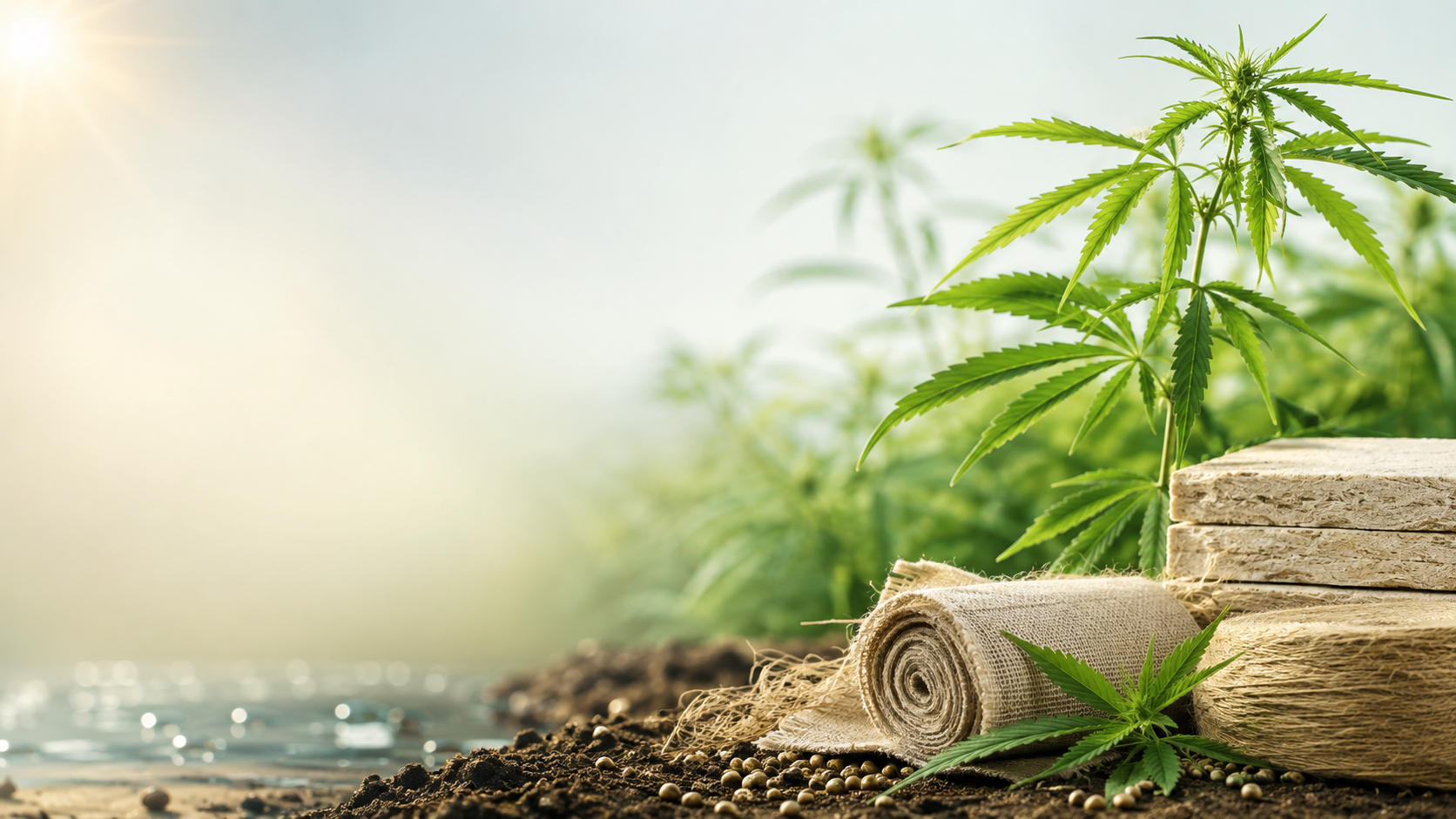
Hemp is appearing in more places, including personal care aisles, food products, clothing, and packaging as brands explore its potential as both a wellness ingredient and a sustainable material. CBD, one of hemp's most well-known derivatives, has driven much of that growth through personal care and wellness products. But alongside its wellness credentials, hemp has an environmental story that includes lower pesticide use, carbon absorption, and the ability to replace plastics that most consumers haven't yet connected to the products they already buy.
Half of Americans have already tried hemp or CBD products — most came through wellness
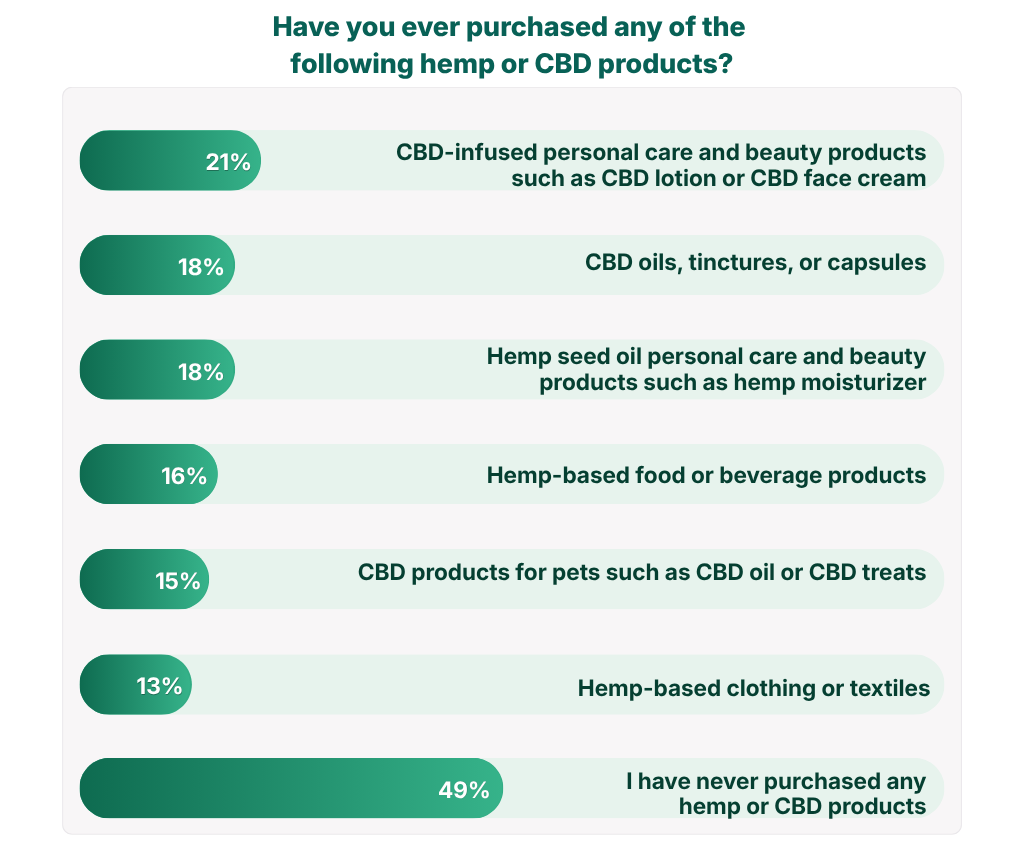
Half of Americans have already purchased a hemp or CBD product in some form. Among those who have, personal care leads: 21% have bought CBD-infused personal care products and 18% hemp seed oil personal care products. Food and beverage (16%), pet products (15%), and clothing and textiles (13%) trail behind. The picture is of a category that has established a real foothold through health and wellness.
When consumers learn about hemp's environmental benefits, 54% say they'd be more likely to purchase
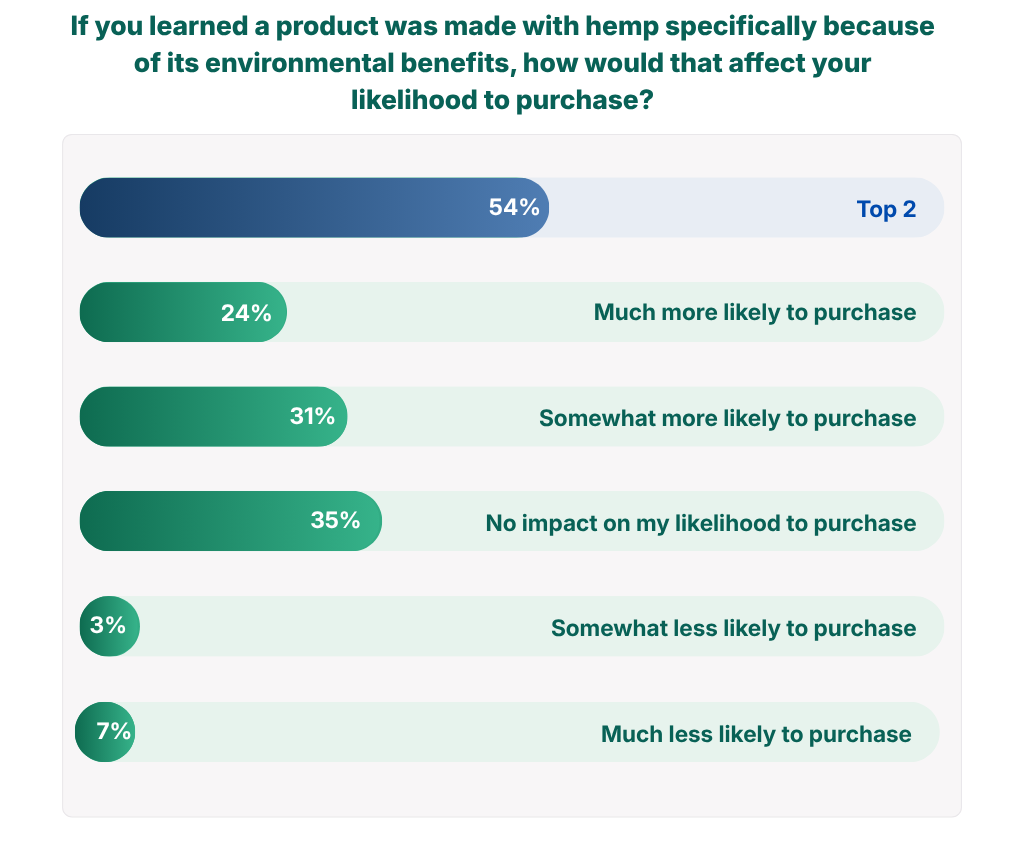
Beyond purchase history, the data reveals something important about consumer openness to hemp's environmental story. When asked how they would respond if they learned a product was made with hemp specifically because of its environmental benefits such as lower pesticide use, carbon absorption, and the ability to replace plastics, 54% say they would be more likely to purchase it, 24% much more likely and 31% somewhat more likely. Ten percent say they would be less likely to purchase, suggesting some residual hesitation around hemp that brands need to be aware of.
What makes the hemp opportunity distinctive is that its environmental credentials and its health credentials aren't competing messages. They reinforce each other. Lower pesticide use is better for the planet and for what ends up in products that touch skin or enter the body. For consumers who already come to hemp through personal care and wellness, the environmental story isn't a pivot, it's an extension of the reason they were interested in the first place.
For brands, the opportunity is specific. Hemp's environmental benefits resonate with consumers who learn about these benefits. Adding the environmental story explicitly and credibly to existing health messaging is a more complete and persuasive strategy.
What's the Takeaway?
Half of Americans have already engaged with hemp or CBD through health and wellness, but the environmental story behind hemp remains largely untold. When consumers hear it, most respond positively. Brands that connect hemp's environmental credentials to the health benefits consumers already value are building a more complete case for the category. Consumer receptivity is there. The communication gap is the opportunity, not just for brands already in the hemp space, but for any brand considering hemp as an ingredient or material in products consumers already buy and trust.