
Recycling is a widely practiced sustainability behavior in American households. But consumer commitment to recycling and consumer confidence in the recycling system are two different things — and the gap between them is becoming a brand trust issue that packaging claims alone can't close.
Americans recycle and believe in it, but most also doubt the system is actually working.
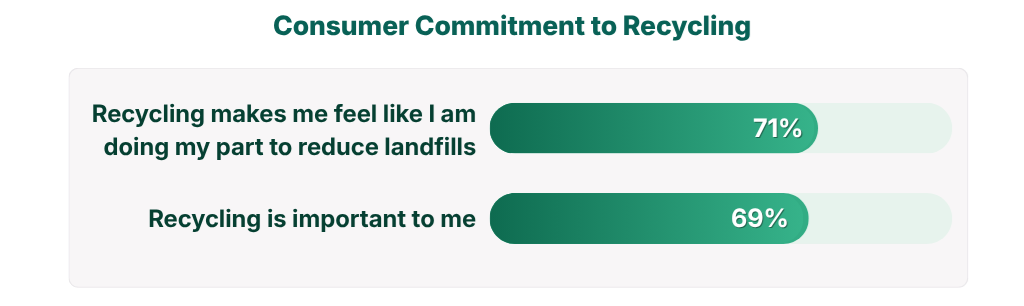
The commitment is genuine. Nearly seven in ten Americans say recycling is important to them (69%) and that it makes them feel like they are doing their part (71%).
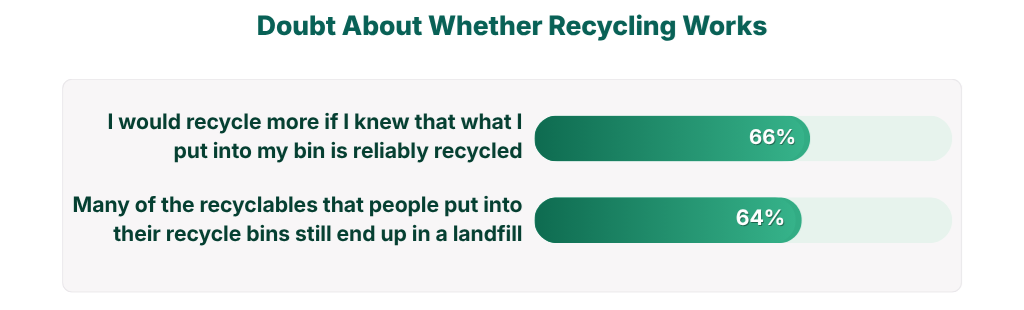
That commitment, however, coexists with significant doubt about whether the system delivers. Sixty-four percent believe many recyclables still end up in landfill, and 66% say they would recycle more if they knew what they put in their bin is reliably recycled. That conditional — I would do more if I knew it worked — is the trust gap in plain language.
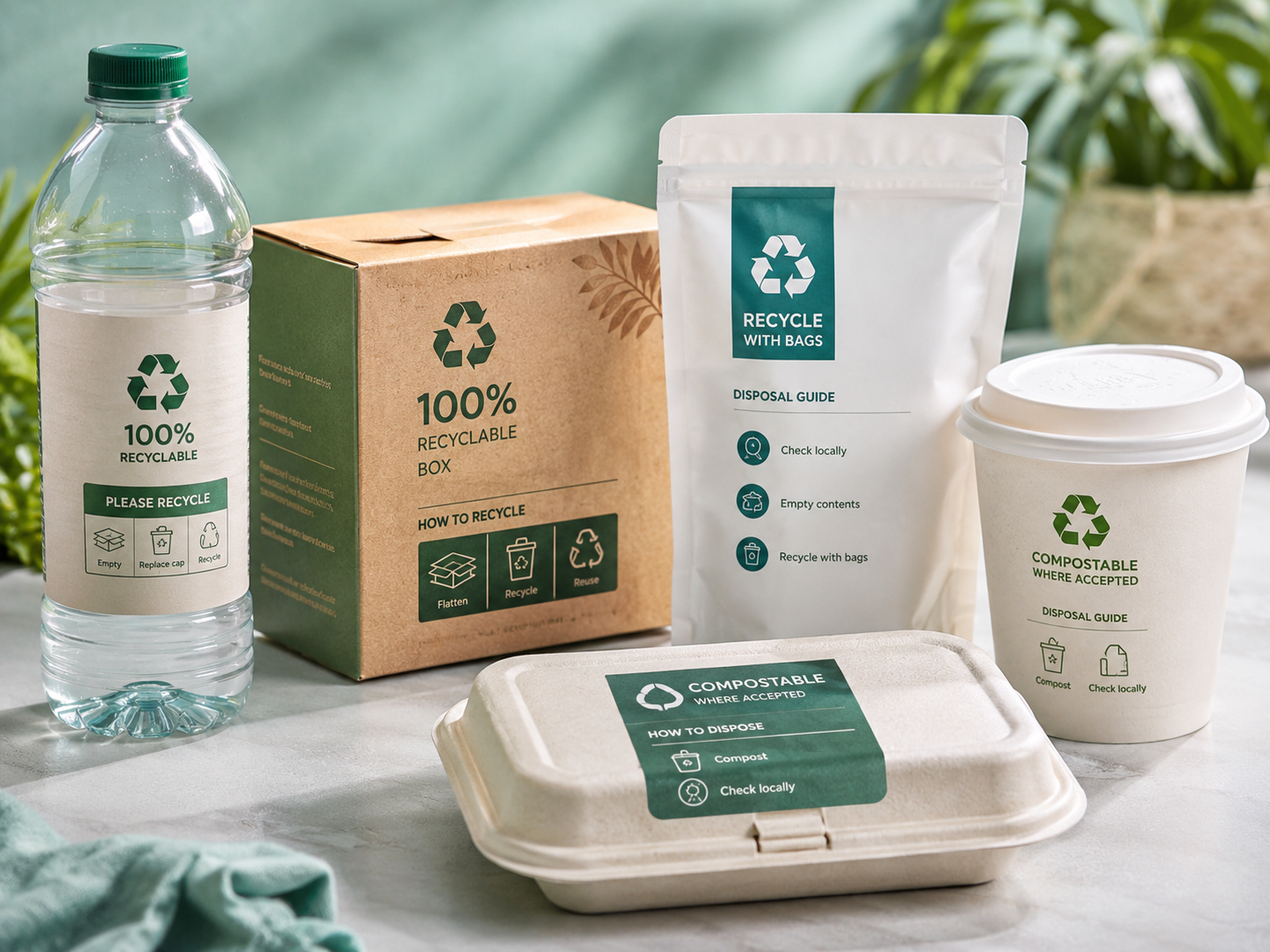
Consumers are looking to brands to fix the problem. Three quarters want standardized recycling labels that clearly communicate whether packaging can be recycled, 73% say companies need to do better at using easily recyclable packaging materials, and 68% say companies need to do a better job telling them how to recycle or dispose of their packaging.
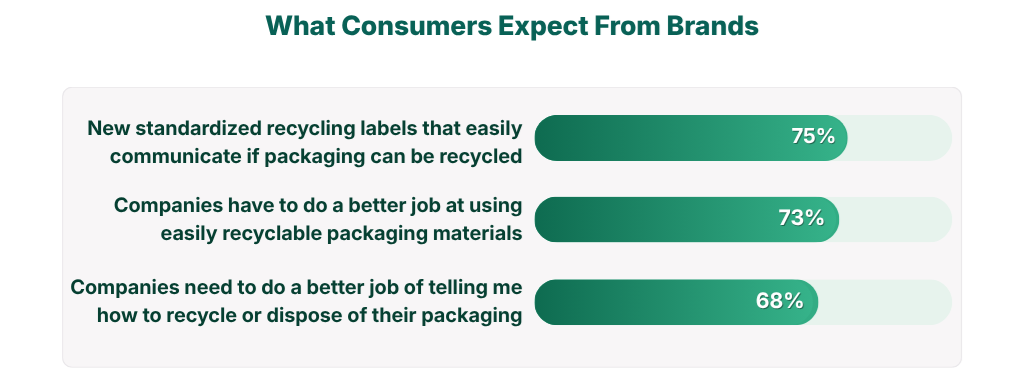
Consumers are telling brands exactly what they want — clearer labels, better materials, and honest guidance on disposal.
Looking more closely at personal experience with local recycling programs, the trust gap deepens. Only 59% of consumers are confident that materials they put in their recycling bin are actually being recycled. Only 54% think their local program keeps up with changes in packaging materials and technology. And only 48% say their community regularly shares information about recycling rates and outcomes. That information vacuum at the local level is where consumer doubt is formed — and where brands have an underused opportunity to help.
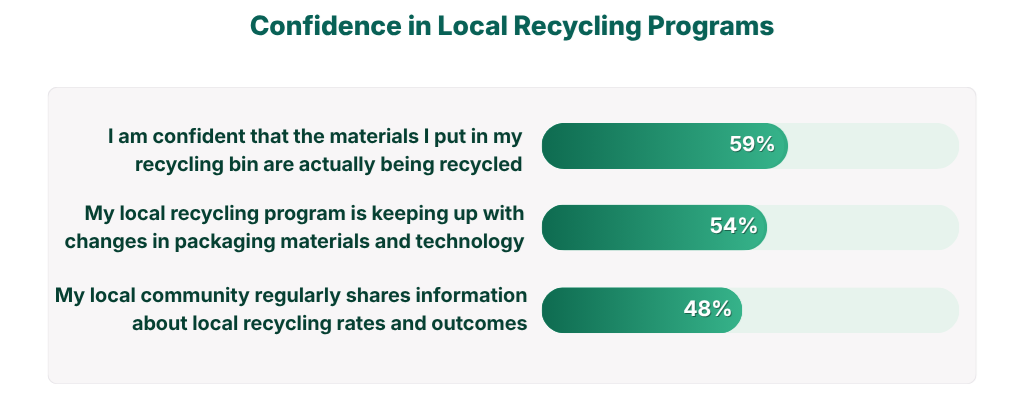
Consumer confidence in recycling operates at two levels simultaneously — the label and the community system behind it. Brands that only address the label are solving half the problem. The recycling symbol has become a shortcut that consumers are increasingly skeptical of — not because they don't want to recycle, but because they have lost confidence that the system works. That skepticism transfers directly to the brand making the claim.
Brands that go beyond the symbol — providing clear and specific guidance on how and where their packaging can be recycled, advocating for better local recycling infrastructure, and being transparent about where their packaging actually ends up — are turning a compliance checkbox into a genuine brand trust asset. In a category where many brands are doing the minimum, that transparency is a meaningful differentiator.
What's the Takeaway?
Consumer commitment to recycling is high — but so is doubt that the system actually works, and brands are expected to address this issue. The opportunity is clear: go beyond the recycling symbol. Design your packaging for maximum recyclability given the current recycling systems, provide specific guidance on how and where your packaging can be recycled, and engage at the community level to support better recycling outcomes. The brands that go beyond the symbol and deliver on their recycling claims are building the kind of trust that translates into loyalty and a credible platform for everything else they say about sustainability.