
Compostable packaging is increasingly appearing on store shelves as a sustainable alternative to conventional plastic. For it to deliver on that promise, two things need to be true: consumers need to understand what compostable packaging actually means, and the right infrastructure needs to exist in their community. The data suggests both are still works in progress.
Half of Americans understand compostable packaging — the other half are willing to compost anyway.
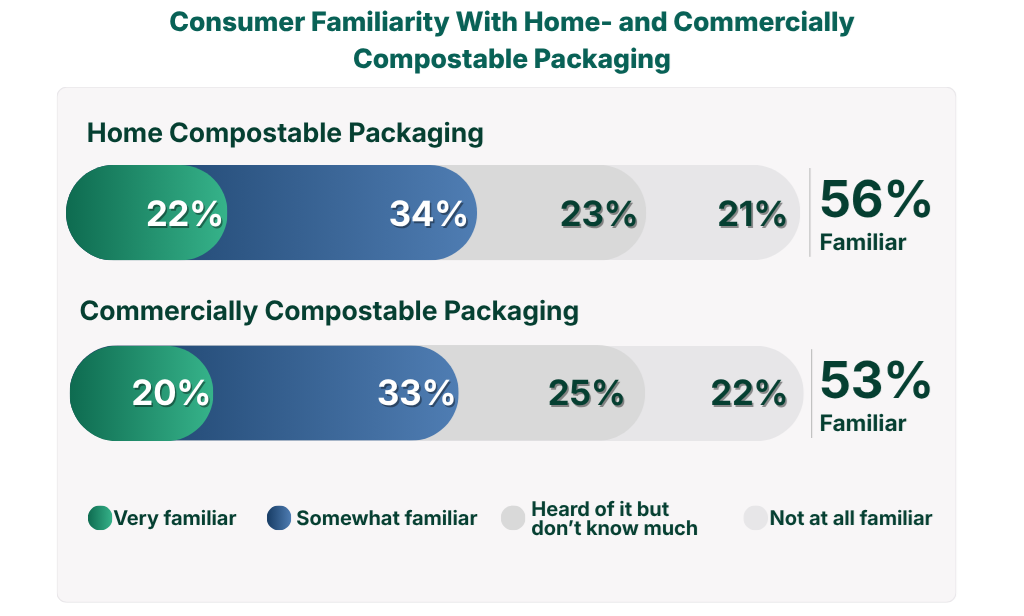
Just over half of Americans are familiar with compostable packaging — 56% with home compostable and 53% with commercially compostable formats. Importantly, these are largely the same consumers. Those who understand one type almost universally understand the other, and those unfamiliar with one are equally unfamiliar with the other. In practical terms, about half of Americans understand compostable packaging and about half don't.
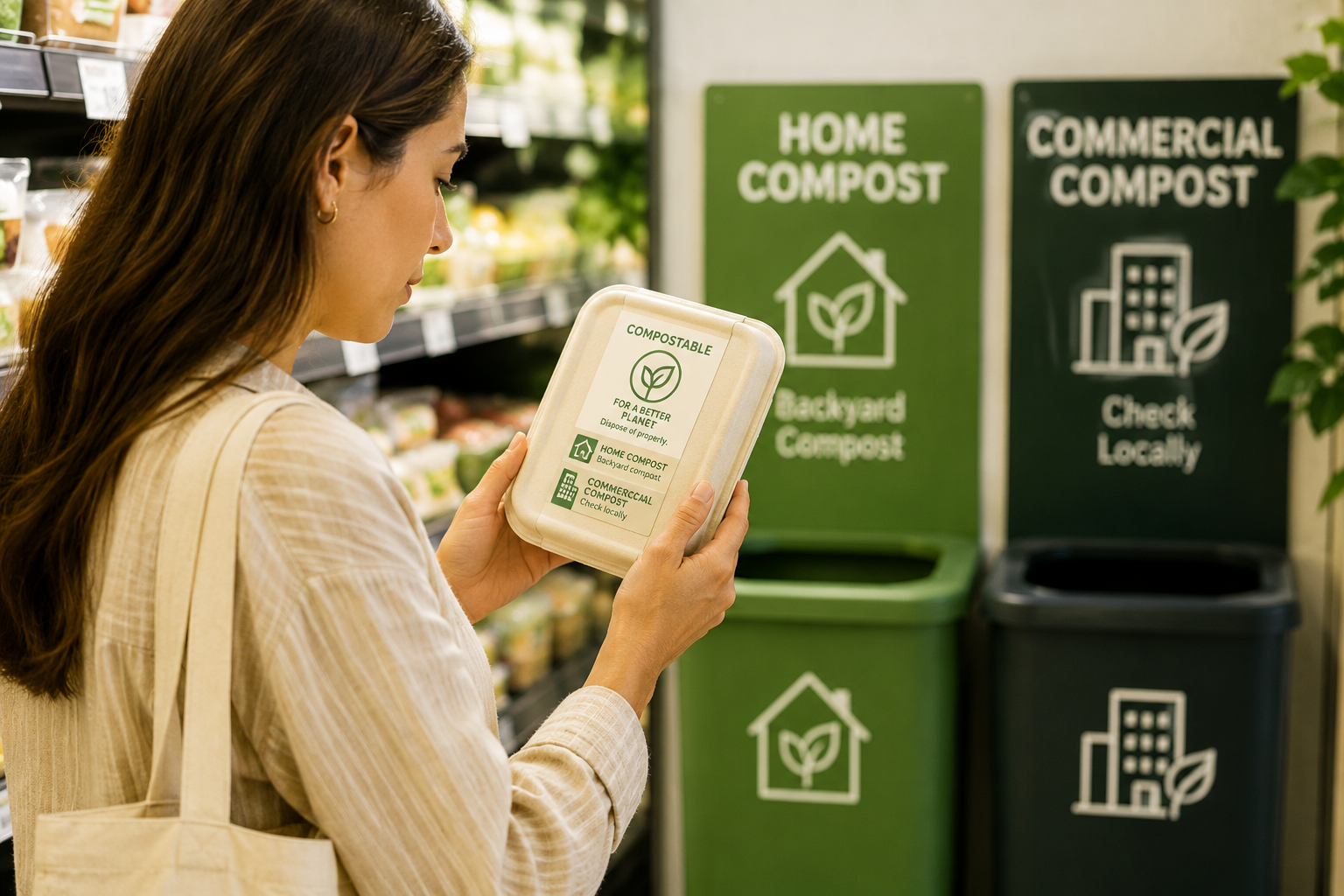
The distinction between home and commercially compostable packaging is important and often misunderstood. Home compostable packaging is designed to break down in a backyard compost setup. Commercially compostable packaging requires the higher temperatures and controlled conditions of an industrial composting facility — something that cannot be replicated at home, and that most community composting programs are not set up to handle. A compostable label without that distinction leaves consumers without the information they need to dispose of packaging correctly.
Eighty percent of consumers would use curbside compost pickup if their community offered it.
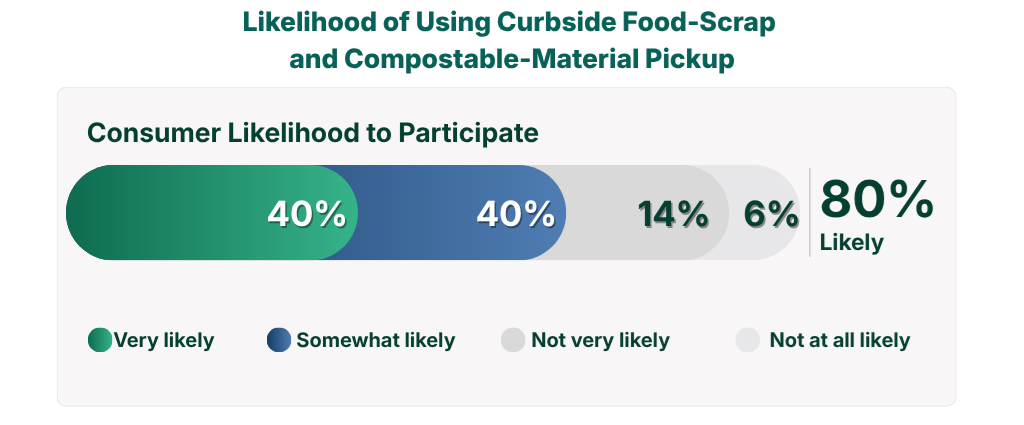
Despite moderate awareness, consumer willingness to participate in composting is strikingly high. Eighty percent say they would be likely to use curbside compost pickup if their community offered it, with 40% saying very likely. The barrier isn't motivation — it's information and access.
That combination — high willingness, incomplete understanding — is where the information gap becomes a brand risk. When consumers can't tell from a label how a product's packaging can be composted, they make their best guess or don't trust the claim. Packaging that ends up in the wrong composting stream creates problems for waste management programs and reflects back on the brand that made the claim. A compostable label that doesn't specify how and where the packaging can be processed isn't just incomplete — it's a liability for the brand behind it.
For brands, the 80% willingness number is only a meaningful opportunity if consumers have both the right infrastructure and the right guidance to act on it. Most don't have either today. Clear, specific labeling that tells consumers exactly how a piece of packaging can be composted is what separates a credible compostable claim from an aspirational one. Brands that go further — advocating for composting infrastructure in the communities where their products are sold and verifying that their claims hold up in real-world conditions — are turning compostable packaging into a genuine sustainability outcome.
What's the Takeaway?
Consumer willingness to compost is high but the infrastructure is lagging behind. Brands using compostable packaging have a clear role to play — label specifically, communicate clearly how packaging can be composted, and support the infrastructure development that makes consumer intent actionable. The 80% who are ready to participate deserve packaging claims they can actually act on.