
Consumer interest in sustainable packaging alternatives is growing, and refillable and reusable formats are increasingly part of that conversation, particularly for food and beverages, one of the product categories where packaging waste is most visible. But interest and adoption are not the same thing. That is where brands need to focus.
No single preferred packaging format dominates for food and beverages — and that openness is an opportunity brands haven't taken advantage of.
Recyclable single-use leads at 32% as the preferred food and beverage packaging, but refillable packaging where consumers buy a refill or concentrate follows at 26%, and reusable packaging returned to the store and bringing your own container each sit at 18%. A meaningful 21% say they have no strong preference as long as the option is environmentally responsible.
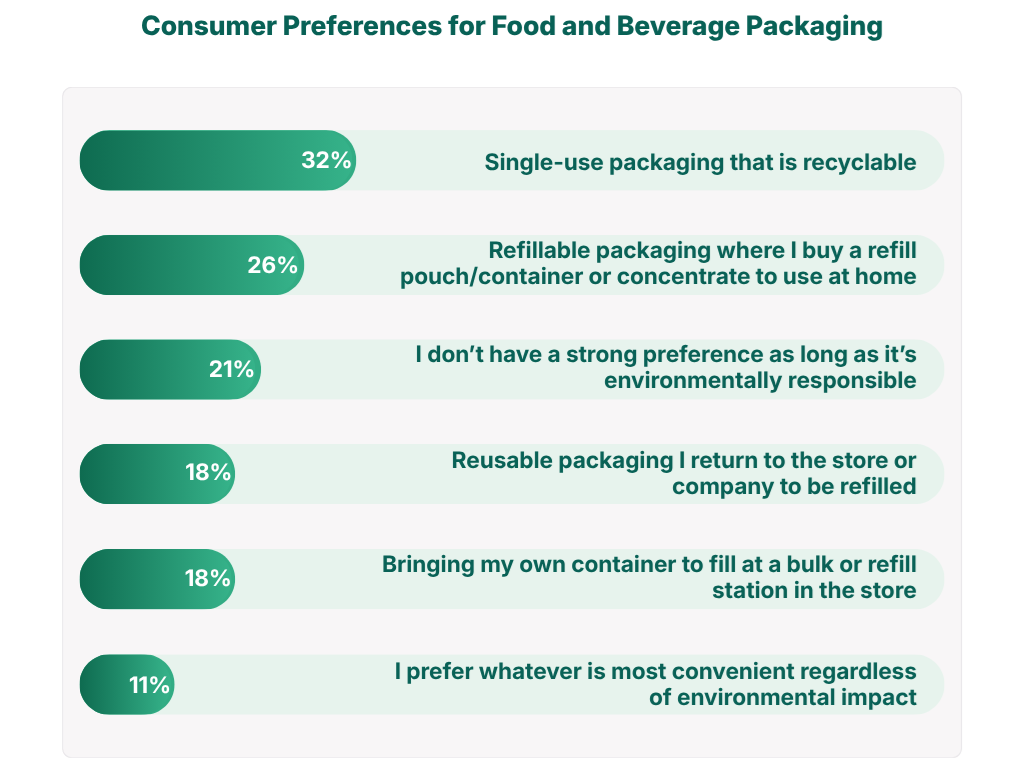
Together the refill and reuse formats represent a substantial share of consumer preference — one that brands can actively cultivate with the right approach.
The barriers consumers identify are specific and addressable — availability, hygiene confidence, and environmental credibility are each within brands' reach to solve.
When asked what would prevent them from using refillable or reusable food and beverage packaging, consumers point to three clusters of barriers. Availability is the most common issue — 30% say refillable options aren't widely available where they shop and 28% say their preferred brands aren't offered in refillable formats. Hygiene and trust form the second cluster — 29% are concerned about hygiene or product quality, a valid consideration in a food and beverage context. Convenience and credibility round out the picture — 24% find it too inconvenient, 20% say it costs more upfront, and 20% aren't sure refillable packaging is actually more environmentally friendly. Thirteen percent say nothing is stopping them — they already use or would be open to these formats.
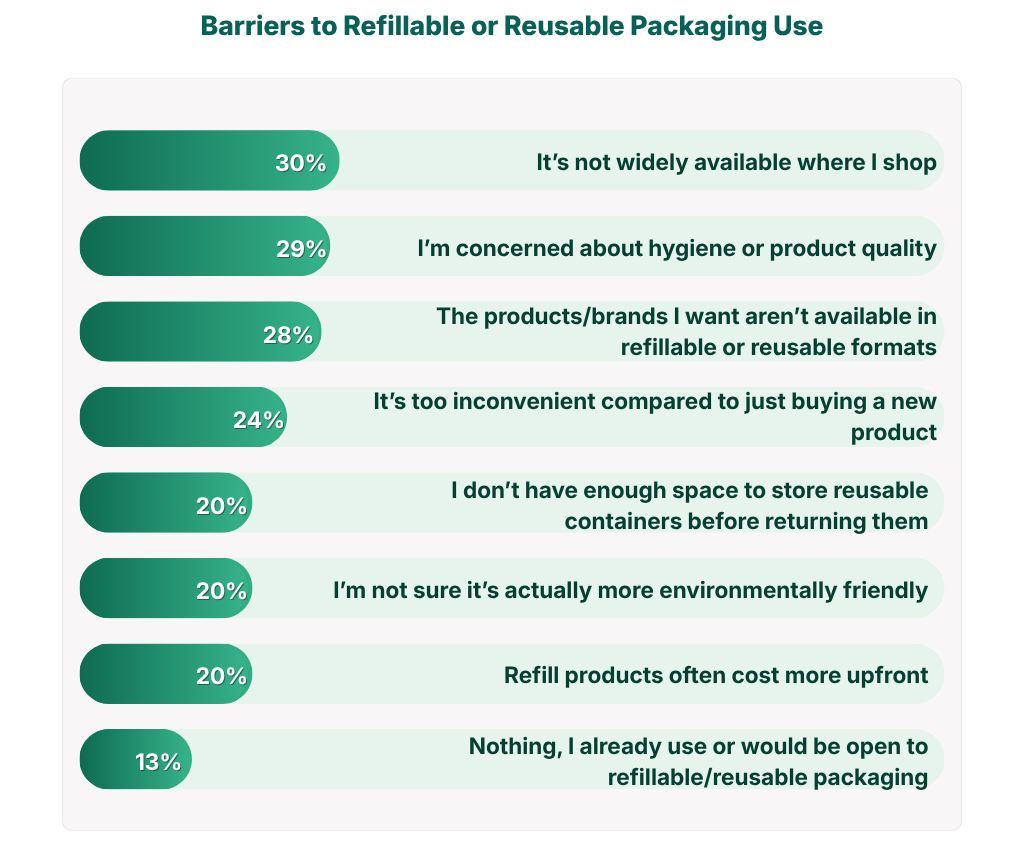
The barriers consumers identify are specific and addressable. Availability can be achieved through increased distribution, and brands should not wait — hygiene concerns need to be tackled in parallel. These concerns are a valid consideration in a food and beverage context and point to a design and communication challenge. Brands need to make safety and quality assurances explicit, not assumed to ensure adoption keeps pace with increased availability. The 20% who aren't sure refillable is actually more environmentally friendly signal a transparency gap that clear, verified information can close. The 13% with no barriers represent an immediately accessible audience.
The brands that will win in this space are those that make refillable options widely available, address hygiene and product quality concerns head on through design and explicit communication, and back environmental claims with clear and verifiable information.
What's the Takeaway?
The opportunity is significant — food and beverages is one of the highest visibility packaging categories for consumers, and brands that bring credible refillable options to market first are better positioned to build loyalty with a growing segment of sustainability-minded shoppers. For these consumers, choosing refillable packaging is one of the most direct ways to reduce single-use plastic and packaging waste with every purchase. The brands that make that choice easy will earn their business.