


Bike to Work Week, May 11-15, is an annual reminder that the commute is one of the most direct ways individuals can reduce their environmental footprint. But how much are employers doing to make that choice easier? In most American workplaces, employers aren’t doing much as commuting support remains among the least developed areas of workplace sustainability.
The office is getting greener — but the commute is being left behind
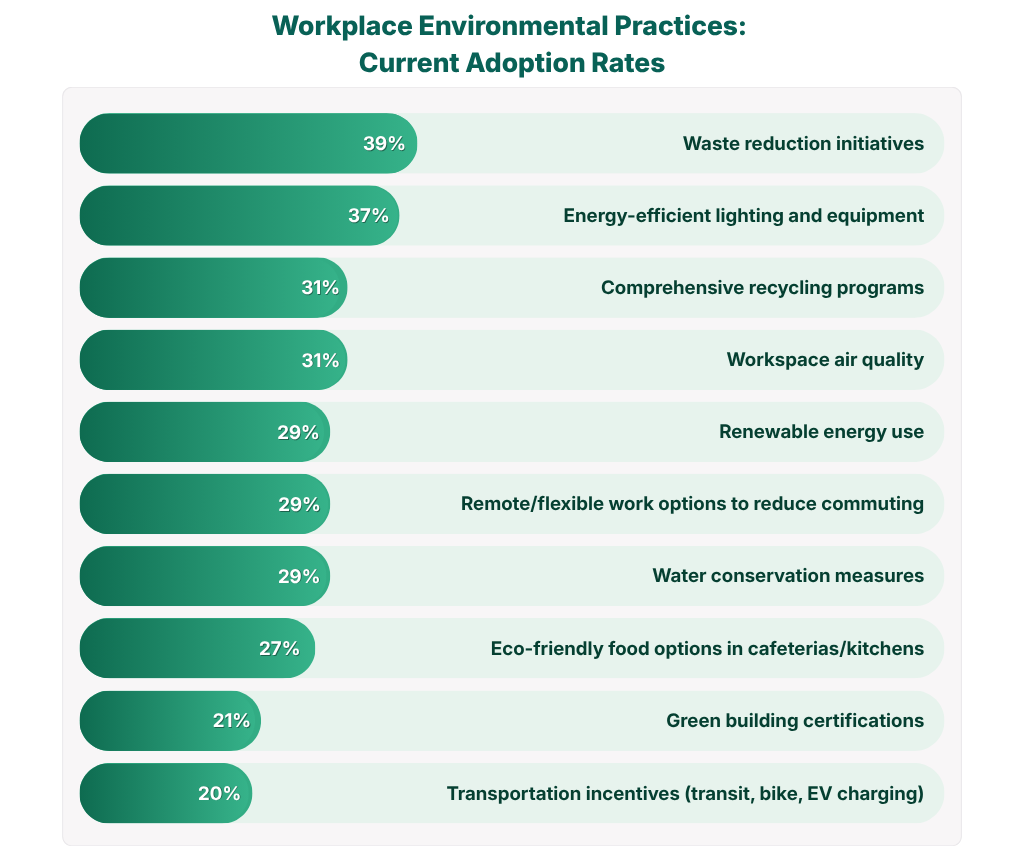
Among employed Americans, transportation incentives such as transit passes, bike infrastructure, and EV charging are among the least common workplace environmental practices, offered by just 20% of employers — trailing well behind waste reduction initiatives (39%), energy-efficient lighting (37%), and even workspace air quality measures (31%). Remote and flexible work options fare somewhat better at 29%, but green commuting remains among the least common workplace environmental practices.
Bike storage and walking incentives remain the exception, not the rule
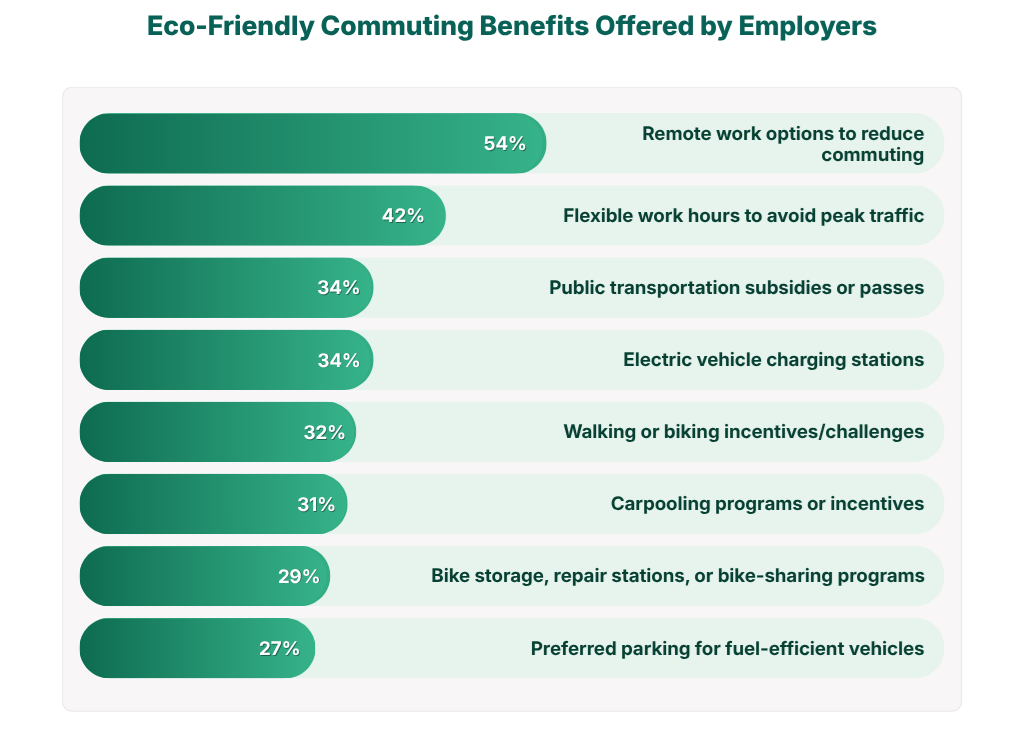
Among employers who do offer eco-friendly commuting benefits, the picture is telling. Remote work options dominate at 54%, followed by flexible hours to avoid peak traffic at 42%. Both are valuable — but they are essentially about eliminating the commute rather than greening it. More active options that directly support Bike to Work Week's mission — bike storage and repair stations (29%), walking or biking incentives (32%) — rank notably lower, even though these are employers already committed enough to offer commuting benefits at all.
The opportunity is clear. Employers who have already invested in remote work and flexible scheduling have laid important groundwork — but Bike to Work Week is a prompt to go further. Bike storage, repair facilities, and active commuting incentives are relatively low-cost additions that send a visible signal to employees about environmental commitment. And as we have seen in previous EcoFocus research, environmental commitment is increasingly part of what employees — especially younger ones — look for in an employer.
What's the Takeaway?
Most workplace sustainability investment focuses on what happens inside the building — lighting, waste, energy. The commute remains a largely untapped opportunity. Employers who invest in active and green commuting options not only reduce their environmental footprint but signal the kind of environmental commitment that increasingly matters to current and prospective employees. And as some employers revisit remote work policies, having visible alternatives in place — bike storage, transit subsidies, walking and cycling incentives — becomes more relevant, not less. Beyond the environmental case, active commuting options carry their own appeal: they support employee health and wellbeing, reduce traffic congestion, and demonstrate a broader commitment to sustainable communities. The employers who move in this direction are not just responding to Bike to Work Week — they are building infrastructure for a greener, healthier workplace culture year-round.